

Choosing a badminton racket should not begin with the most expensive model or the professional player whose name appears in the advertising.
A racket that works well for an advanced singles player may feel tiring or difficult to control for a beginner. Similarly, a very light, speed-focused racket may help a doubles player react quickly but may not provide the solid attacking feel another player expects from the rear court.
The best badminton racket is therefore the one that complements your technique, physical ability, preferred events and playing goals.
SPORTS SHOW Badminton Center in Truganina stocks rackets from Yonex, Li-Ning and Victor, including the Astrox, Nanoflare, Arcsaber, AxForce, Halbertec, Windstorm, BladeX, Thruster, Auraspeed and DriveX ranges. Its website also separates racket options into power, speed and control categories.
Why the Right Badminton Racket Matters
A badminton racket influences how quickly you can prepare for a shot, how easily you can generate racket-head speed and how stable the frame feels during contact.
An unsuitable racket may contribute to:
- Slow defensive reactions
- Difficulty controlling clears and drives
- Inconsistent shuttle contact
- Reduced confidence during fast exchanges
- Excessive arm or shoulder fatigue
- Trouble generating power
- Difficulty changing direction quickly
A suitable racket will not replace coaching or good technique, but it can make the learning process more comfortable and allow your existing skills to work more effectively.
Start with Your Playing Style
Before comparing brands and model names, think about how you naturally play.
Most players lean toward one or more of the following styles:
- Attacking and power-focused
- Fast and defensive
- Control-oriented
- Balanced and all-round
- Front-court doubles
- Rear-court doubles
- Singles
- Social or recreational play
You do not need to fit perfectly into one category. Many players need a racket that performs well across several areas.
Power-Focused Players
Power-focused players often want strong clears, steep smashes and a solid feeling when striking from the rear court.
They may prefer:
- A head-heavy or slightly head-heavy balance
- A stable frame
- Moderate or stiff shaft response
- A racket weight that provides enough momentum
- A string setup that supports controlled attacking shots
Head-heavy rackets place more mass toward the top of the frame. This can help the racket carry momentum through a full swing, although it may also feel slower during quick defensive exchanges.
SPORTS SHOW’s current power-focused collections include models from the Yonex Astrox, Li-Ning AxForce and Victor Thruster families. The store also lists rackets such as the Li-Ning AxForce 80 as a head-heavy power option.
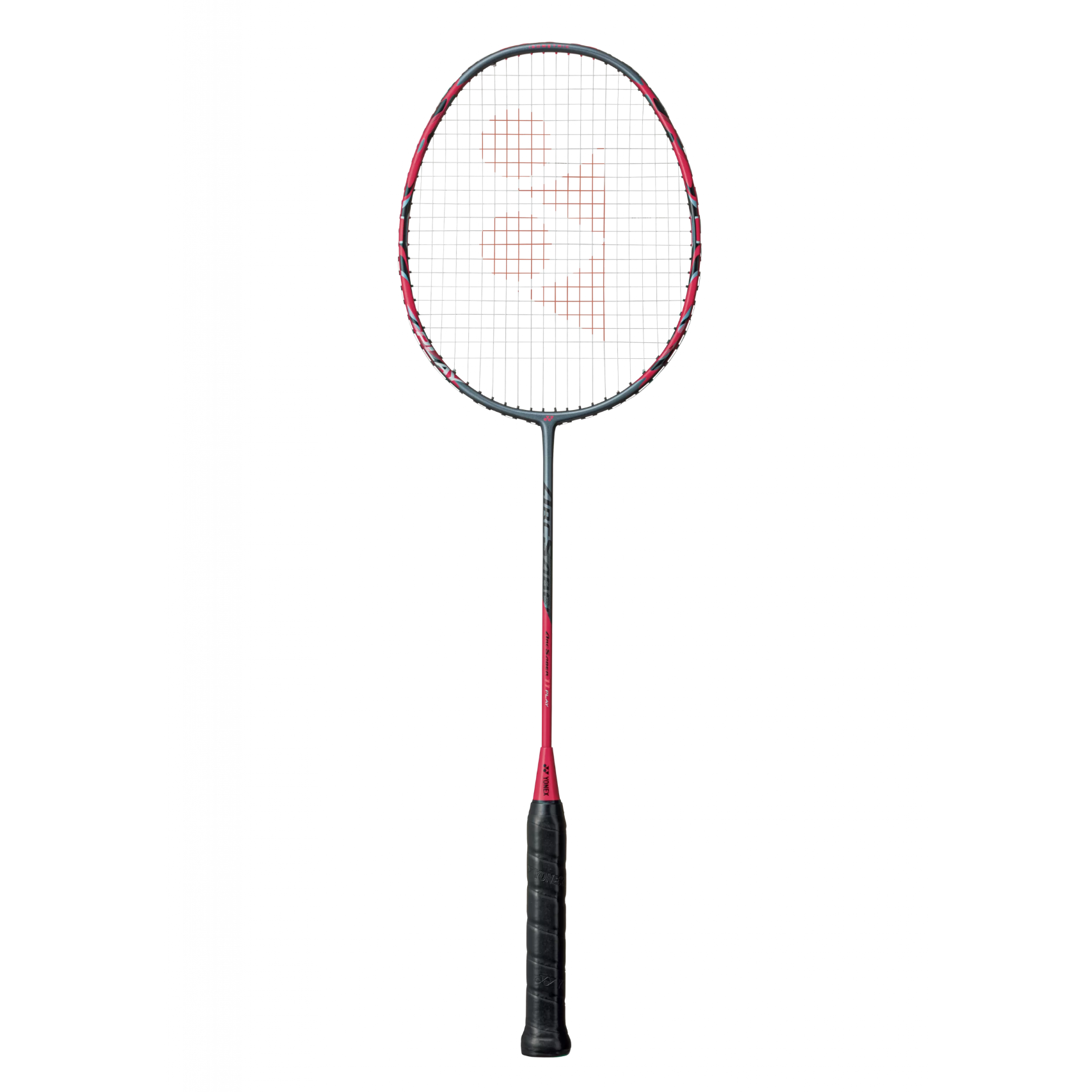
https://spshows.com.au/products/yonex-arscaber-11-racket?variant=45690764886195
A Power Racket May Suit You When:
- You regularly attack from the rear court
- Your main strength is the smash
- You use full, committed swings
- You play singles or rear-court doubles
- You already have reasonable timing and technique
Beginners should be cautious about choosing an extremely head-heavy or stiff racket, as it may feel demanding during longer sessions.
Speed-Focused Players
Speed-focused players prioritise fast preparation, defence, drives, interceptions and rapid changes of direction.
They may prefer:
- A head-light balance
- A 4U or 5U racket
- A fast frame profile
- Easy manoeuvrability
- Medium or flexible shaft response, depending on technique
Head-light rackets place less perceived weight toward the top of the frame. This can make them easier to reposition during fast rallies.
SPORTS SHOW’s speed collection currently includes rackets such as the Yonex Nanoflare 99X, Nanoflare 800 Tour, Victor Auraspeed models and other lightweight options designed around quicker handling.
A Speed Racket May Suit You When:
- You play fast doubles
- You defend frequently
- You enjoy flat drives
- You play at the net
- You prefer shorter, quicker swings
- You find heavier rackets tiring
Very light rackets can feel comfortable and fast, but some players may find them less solid during powerful rear-court shots.
Control-Oriented Players
Control players focus on placement, consistency, shuttle holding, changes of pace and accurate shot construction.
They may prefer:
- An even or slightly head-heavy balance
- A stable frame
- Predictable shaft response
- Good shuttle feedback
- A string setup that supports placement
SPORTS SHOW describes its control rackets as options designed for precision, consistent rallies and adaptable all-round performance. The category is recommended for tactical and intermediate players seeking a combination of power, speed and accuracy.
A Control Racket May Suit You When:
- You construct rallies patiently
- You use drops, slices and placement
- You value consistency over maximum power
- You want an adaptable singles and doubles racket
- You prefer a balanced response across different shots
Yonex Arcsaber, Li-Ning Halbertec and Victor DriveX models are among the commonly recognised control or all-round families currently represented on the SPORTS SHOW website.
All-Round Players
An all-round racket is often the most practical choice for players who are still developing their style.
Balanced rackets can offer:
- Reasonable attacking power
- Manageable defensive speed
- Predictable control
- Comfort across singles and doubles
- Easier adaptation between front and rear court
An all-round racket may be particularly suitable for club players, social players and developing juniors who do not yet need a highly specialised setup.
Understanding Badminton Racket Weight
Badminton rackets are commonly labelled using weight classes such as 3U, 4U and 5U.
The exact range may vary slightly between brands, but the general comparison is:
| Weight Class | General Feel | Common Suitability |
|---|---|---|
| 3U | Heavier and more solid | Strong players, singles and power-focused play |
| 4U | Balanced combination of speed and stability | Most intermediate players and doubles players |
| 5U | Lightweight and fast | Beginners, juniors, defensive play and quick doubles |
SPORTS SHOW currently stocks rackets across 3U, 4U and 5U categories, with models intended for beginners, all-round players, attacking players and speed-focused users.
Choosing 3U
A 3U racket may provide:
- More momentum through the swing
- A stable feeling during powerful contact
- Strong rear-court performance
However, it may require more strength and preparation time.
Choosing 4U
A 4U racket is often a useful middle ground.
It can provide:
- Sufficient stability
- Faster handling than many 3U rackets
- Suitability for singles and doubles
- A manageable learning curve
Many current Yonex, Li-Ning and Victor models are available in 4U specifications.
Choosing 5U
A 5U racket may feel:
- Easy to swing
- Quick during defence
- Comfortable during longer sessions
- Suitable for beginners or players with less upper-body strength
The Li-Ning Windstorm collection is marketed around ultra-light handling, easier manoeuvrability and reduced fatigue, with beginner, junior and speed-focused players among its intended users.
The lightest racket is not automatically the best. A player who hits with a large, powerful swing may prefer more stability than an ultra-light frame provides.
Head-Heavy, Even-Balance or Head-Light?
Balance describes how the weight of the racket feels across the frame and handle.
Head-Heavy Balance
More weight is felt toward the racket head.
Potential advantages:
- Stronger momentum
- Solid rear-court feel
- Support for clears and smashes
Potential limitations:
- Slower defensive preparation
- Greater fatigue for some players
- More demanding during fast doubles exchanges
Even Balance
Weight feels more evenly distributed.
Potential advantages:
- Adaptable performance
- Balanced power and speed
- Suitable for developing players
- Easier transition between singles and doubles
Potential limitations:
- May not feel as specialised as a dedicated power or speed racket
Head-Light Balance
More weight is felt toward the handle.
Potential advantages:
- Fast racket preparation
- Easier defence
- Quick drives and net interceptions
- Reduced perceived swing weight
Potential limitations:
- Some players may generate less rear-court power
- Contact may feel less solid on full smashes
Try to compare rackets in person where possible. Two models with similar specifications can still feel different because of frame design, shaft construction, grip size and overall weight distribution.
Choosing the Right Shaft Flexibility
The shaft connects the racket handle to the head and bends during the swing.
Rackets are commonly described as:
- Flexible
- Medium-flex
- Medium
- Stiff
- Extra stiff
Flexible Shaft
A flexible shaft bends more easily.
It may suit:
- Beginners
- Players with slower swing speeds
- Juniors
- Recreational players
- Players seeking easier length on clears
The additional bending action can help players who are still developing swing speed, although the response may feel less precise to advanced players.
Medium-Flex Shaft
A medium-flex shaft provides a balance between assistance and control.
It may suit:
- Intermediate players
- All-round players
- Club doubles
- Players still developing technique
- Users wanting one versatile racket
Stiff Shaft
A stiff shaft bends less and responds more directly.
It may suit:
- Advanced players
- Players with fast swing speeds
- Strong attacking players
- Users seeking precision and immediate response
A stiff racket does not automatically create more power. Players need sufficient timing and racket-head speed to use it effectively.
Skill Level Matters
Beginners
Beginners generally benefit from comfort, manoeuvrability and forgiveness.
Suitable characteristics may include:
- 4U or 5U weight
- Even or slightly head-light balance
- Flexible or medium-flex shaft
- Comfortable grip size
- Moderate string tension
- Durable frame construction
The purpose is to make it easier to practise clears, serves, drives and basic footwork without unnecessary fatigue.
Intermediate Players
Intermediate players usually have more consistent technique and a clearer understanding of their preferred style.
They may choose:
- 4U for versatile performance
- Head-heavy balance for attacking play
- Head-light balance for doubles speed
- Even balance for all-round use
- Medium or stiff shaft response
- A customised string and tension setup
This is often the stage when choosing by playing style becomes more important than choosing a general beginner racket.
Advanced Players
Advanced players may look for:
- Precise weight and balance
- Faster shaft recovery
- Greater frame stability
- Specific aerodynamic characteristics
- Higher string-tension capability
- A specialised singles or doubles setup
Advanced rackets can feel demanding. A premium model is not automatically suitable for a less experienced player.
Choosing a Racket for Singles
Singles involves greater court coverage and often includes deeper clears, patient rally construction and rear-court attacks.
Singles players may prefer:
- 3U or 4U weight
- Even or head-heavy balance
- A stable frame
- Medium or stiff shaft
- Strong rear-court performance
A highly defensive player may still prefer a lighter or more balanced racket, so the event alone should not determine the choice.
Choosing a Racket for Doubles
Doubles requires fast reactions, compact swings and frequent defensive exchanges.
Front-court and defensive players may prefer:
- 4U or 5U weight
- Head-light or even balance
- Fast handling
- Easy drive and interception speed
Rear-court attacking players may prefer:
- 4U weight
- Slightly head-heavy balance
- Stable smashing response
- Enough speed for rotation and defence
Many doubles players choose 4U because it provides a useful combination of manoeuvrability and stability.
Front-Court Versus Rear-Court Doubles
Front-Court Player
A front-court player often needs:
- Fast racket preparation
- Quick grip changes
- Sharp interceptions
- Accurate net control
- Compact drive response
A head-light or even-balanced racket may be suitable.
Rear-Court Player
A rear-court player often needs:
- Strong clears
- Consistent attacking length
- Powerful smashes
- Stable contact
- Effective follow-up shots
A slightly head-heavy racket may provide the desired feel without becoming excessively slow.
Grip Size and Comfort
Grip size affects control, finger movement and comfort.
A smaller grip can:
- Allow easier finger control
- Make grip changes faster
- Be adjusted with an additional overgrip
A larger grip can:
- Feel more secure for players with bigger hands
- Reduce excessive finger closing
- Suit players who prefer a fuller handle
Many players buy a smaller factory grip and build it up gradually with replacement grips or overgrips.
The correct grip should allow you to hold the racket without squeezing continuously. Excessive grip pressure can slow racket movement and contribute to fatigue.
How Strings Affect Racket Performance
The racket frame and string setup work together.
String choice can influence:
- Feel
- Repulsion
- Durability
- Sound
- Control
- Shuttle feedback
Thinner strings may provide a sharper feel and stronger repulsion but may break more easily. Thicker strings often provide greater durability.
No string performs perfectly in every area, so players should balance performance with budget and playing frequency.
SPORTS SHOW provides in-store racket stringing at its Truganina badminton centre, allowing customers to discuss string selection and tension alongside their racket purchase.
Understanding String Tension
String tension affects the feel and effective hitting area of the racket.
Lower Tension
Lower tension generally provides:
- A softer feel
- A larger forgiving hitting area
- Easier length for developing players
- Better tolerance of off-centre contact
It may suit beginners, juniors and casual players.
Higher Tension
Higher tension generally provides:
- A firmer response
- Greater precision for technically consistent players
- A smaller effective sweet spot
- Less forgiveness on off-centre shots
It may suit experienced players with reliable timing.
Higher tension does not automatically produce more power. Players who cannot consistently contact the centre of the string bed may lose both distance and comfort.
Always remain within the manufacturer’s recommended tension range for the specific racket.
Do Not Copy a Professional Player’s Setup Blindly
Professional players use equipment selected for highly developed technique, physical conditioning and specific tactical requirements.
Their racket may have:
- A stiff or extra-stiff shaft
- A demanding balance
- High string tension
- A customised grip
- Frequent restringing
The same setup may feel uncomfortable or ineffective for a social or developing player.
Use professional equipment choices as inspiration, not as a substitute for evaluating your own needs.
Yonex Racket Families at SPORTS SHOW
SPORTS SHOW currently groups its main Yonex rackets into three recognised families:
Yonex Astrox
Generally associated with attacking and power-focused play.
May suit:
- Rear-court players
- Smash-focused players
- Singles attackers
- Players who prefer a head-heavy feel
Yonex Nanoflare
Generally associated with speed and fast handling.
May suit:
- Defensive doubles players
- Front-court players
- Drive-focused users
- Players wanting quick reactions
Yonex Arcsaber
Generally associated with control, shuttle placement and all-round response.
May suit:
- Tactical players
- Intermediate users
- Players seeking controlled shot placement
- Singles and doubles players needing versatility
These families are currently listed as major Yonex categories on the SPORTS SHOW website.
Li-Ning Racket Families at SPORTS SHOW
SPORTS SHOW currently carries several Li-Ning collections.
Li-Ning AxForce
Commonly selected for attacking power and head-heavy performance.
Li-Ning Halbertec
Designed around control, stability and all-round performance.
Li-Ning Windstorm
Focused on lightweight handling and swing speed.
Li-Ning BladeX
Designed for fast, responsive play and quicker racket movement.
The current SPORTS SHOW range includes options for beginners, club players and competitive users across these collections.
Victor Racket Families at SPORTS SHOW
SPORTS SHOW also stocks Victor racket ranges.
Victor Thruster
Generally aimed at attacking and power-focused players.
Victor Auraspeed
Designed around speed, quick reactions and fast exchanges.
Victor DriveX
Positioned for control and balanced all-round performance.
These categories allow players to compare different performance directions without assuming one brand is best for everyone.
Common Racket-Buying Mistakes
Choosing Only by Brand
Every major brand offers different weight, balance and flexibility options. The logo alone does not determine suitability.
Buying the Most Expensive Model
Premium rackets are often designed for technically developed players and may be less forgiving.
Ignoring Weight
A racket that feels comfortable for two swings may become tiring during a long match.
Choosing Excessive String Tension
High tension can reduce forgiveness and make clean timing more important.
Forgetting Grip Size
An uncomfortable grip affects finger control and can cause unnecessary tension in the hand and forearm.
Buying a Highly Specialised Racket Too Early
Developing players often benefit more from a balanced racket that allows them to practise all areas of the game.
Ignoring Restringing
Old strings lose tension and responsiveness. A suitable racket can feel poor when the string bed is worn or unsuitable.
A Simple Racket Selection Guide
| Player Type | Suggested Starting Direction |
| Beginner | 4U or 5U, flexible or medium-flex, even or slightly head-light |
| Social player | 4U, even balance, medium-flex |
| Singles attacker | 3U or 4U, head-heavy, medium or stiff |
| Doubles defender | 4U or 5U, head-light, fast frame |
| Front-court doubles player | Lightweight, head-light or even balance |
| Rear-court doubles player | 4U, slightly head-heavy, stable frame |
| Control player | Even balance, stable frame, medium or stiff shaft |
| Junior player | Lightweight, manageable grip and flexible shaft |
This table is a starting point rather than a fixed rule. Personal comfort remains important.
When Should You Upgrade Your Racket?
Consider upgrading when:
- Your current racket no longer supports your playing style
- You have developed faster swing speed
- You want a different balance for singles or doubles
- The frame is damaged
- You need a lighter racket for quicker defence
- You need greater stability for attacking play
- Your coach recommends a more suitable specification
- You now understand which features you prefer
Before replacing the racket, consider whether a new string, different tension or improved grip could solve the problem.
Should You Own More Than One Badminton Racket?
Regular players often carry at least two rackets.
A backup is useful when:
- A string breaks during a match
- One racket is being restrung
- You play both singles and doubles
- You want different setups for training and competition
- You prefer separate power and speed rackets
The backup should still feel familiar enough that changing rackets does not completely disrupt timing.
Test the Racket on Court
Specifications can narrow the options, but court testing provides the clearest feedback.
When testing a racket, try:
- Clears
- Smashes
- Drives
- Net shots
- Defensive lifts
- Quick grip changes
- Backhand preparation
- Repeated rallies
Pay attention to:
- Swing comfort
- Timing
- Frame stability
- Fatigue
- Shot consistency
- Defensive speed
- Confidence under pressure
SPORTS SHOW combines its physical retail store with badminton court hire, coaching and stringing at the same Truganina venue, making it possible for local players to receive equipment support and use nearby playing facilities.
Frequently Asked Questions
What is the best badminton racket for a beginner?
A lightweight 4U or 5U racket with an even or slightly head-light balance and a flexible or medium-flex shaft is often a practical starting point.
Is a head-heavy racket better for smashing?
A head-heavy racket can provide more momentum during a full swing, but effective smashing still depends on timing, technique, footwork and physical ability.
Is 3U or 4U better?
A 3U racket generally feels heavier and more solid, while a 4U racket is usually easier to manoeuvre. Many doubles and intermediate players choose 4U for its balance of speed and stability.
Is 5U too light?
Not necessarily. A 5U racket may suit beginners, juniors, defensive doubles players and anyone prioritising comfort and speed.
Should beginners use high string tension?
Beginners generally benefit from a more forgiving setup with a larger effective hitting area. The final tension should remain within the racket manufacturer’s recommended range.
Which badminton racket brand is best?
Yonex, Li-Ning and Victor all make rackets for different abilities and playing styles. Compare the individual model rather than choosing by brand name alone.
Does SPORTS SHOW provide racket stringing?
Yes. Racket stringing is available through the physical badminton centre in Truganina.
Can I collect a racket from the Truganina store?
Yes. SPORTS SHOW provides local pickup and in-store assistance from its Truganina location.
Final Thought
The right badminton racket should make your game feel more natural rather than more difficult.
Begin by identifying whether you value power, speed, control or all-round performance. Then compare weight, balance, shaft flexibility, grip size and string setup according to your experience and physical comfort.
Beginners usually benefit from a forgiving and manageable racket. Intermediate players can choose more specifically by playing style, while advanced players may prefer specialised frames and string setups.
SPORTS SHOW allows Melbourne players to compare Yonex, Li-Ning and Victor rackets while also accessing in-store stringing, court booking, coaching, memberships and local equipment support at its Truganina badminton centre.
Address and Contact Details
SPORTS SHOW Badminton Center
Unit 1/150 Palmers Road
Truganina VIC 3029
Australia
Phone: 0428 837 761
Email: spshows150@gmail.com
Opening Hours
Monday to Friday: 9:00 am–11:00 pm
Saturday and Sunday: 8:00 am–11:00 pm
The address, phone number, email address and current opening hours are listed on SPORTS SHOW’s contact and badminton information pages.
Booking and Ordering Details
To Buy a Badminton Racket Online
- Visit the SPORTS SHOW website.
- Open the Badminton Rackets collection.
- Browse by brand, including Yonex, Li-Ning or Victor.
- Alternatively, browse by playing style: power, speed or control.
- Review the racket weight, grip size, balance and product description.
- Select the required specification.
- Add the racket to the shopping cart.
- Choose delivery or local pickup where available.
- Enter the required contact and payment details.
- Confirm whether stringing is required before completing the order.
The online store currently lists rackets across multiple weights and price levels, including beginner, lightweight, control and attacking models.
To Book a Badminton Court
- Visit the Badminton Court Booking page.
- Open the online booking system.
- Select the preferred date.
- Choose an available court and time.
- Enter the required player and contact details.
- Review the booking information.
- Complete payment or confirmation as requested.
- Retain the booking confirmation.
SPORTS SHOW links its badminton court reservations to an online booking system from its website.
To Enquire About Coaching
- Open the Coach page on the SPORTS SHOW website.
- Review the available badminton coaching information.
- Contact the centre with the player’s age, experience and preferred schedule.
- Ask about private coaching, group sessions or junior classes.
- Confirm the coach, session time, price and court arrangements before attending.
The centre currently promotes badminton classes for both children and adults, with current class offers displayed on the website.
To Arrange Racket Stringing
Bring or send the racket to the Truganina store and discuss:
- Current playing level
- Preferred string
- Required tension
- Playing frequency
- Power, durability or control priorities
- Collection timing
For racket recommendations, court booking, coaching or stringing assistance, call 0428 837 761 or email spshows150@gmail.com.